
To the untrained eye, a riot of blooms across silk might seem merely decorative. But in the hands of Vittorio Accornero—painter, illustrator, and the discreet mastermind behind some of the 20th century’s most enduring botanical designs—flowers were neither motif nor trend. They were manuscript.
Born in 1896 in Casale Monferrato, Italy, Accornero was a man whose aesthetic sensibility seemed to belong to an earlier, more delicate century. Trained at the Brera Academy of Fine Arts in Milan, he came of age during Italy’s turbulent interwar years, but chose not the path of futurism or expressionism, as many of his contemporaries did. Instead, he turned his attention to the exquisite—and often overlooked—world of illustrated books. He produced finely detailed drawings for children’s literature and fairy tales, a foundation that would come to define his visual voice: intricate, whimsical, and always anchored in precision.
It wasn’t until the 1960s, well into his sixties, that Accornero became associated with the house of Gucci. In 1966, Rodolfo Gucci commissioned a gift for Princess Grace of Monaco—something unique, something floral. What Accornero delivered was Flora, a silk scarf featuring 43 varieties of flowers, fruits, and insects arranged in a surreal, symmetrical arcadia. The scarf was a sensation, and a defining piece of mid-century fashion illustration. But what made it quietly revolutionary was its technical fluency: each flower was botanically identifiable, every beetle anatomically plausible, yet the composition retained the sense of a page torn from a fairy tale.
Accornero went on to produce over 80 scarf designs for Gucci in the following decade. He worked almost entirely by hand, often drawing from antique herbals, field guides, and historical botanical plates. His florals were not imagined but studied: helleborus niger, cynara scolymus, papaver somniferum—each bloom a testament to his enduring belief that beauty should be specific. And yet, his illustrations never felt clinical. There was always grace. Movement. Humour, even.
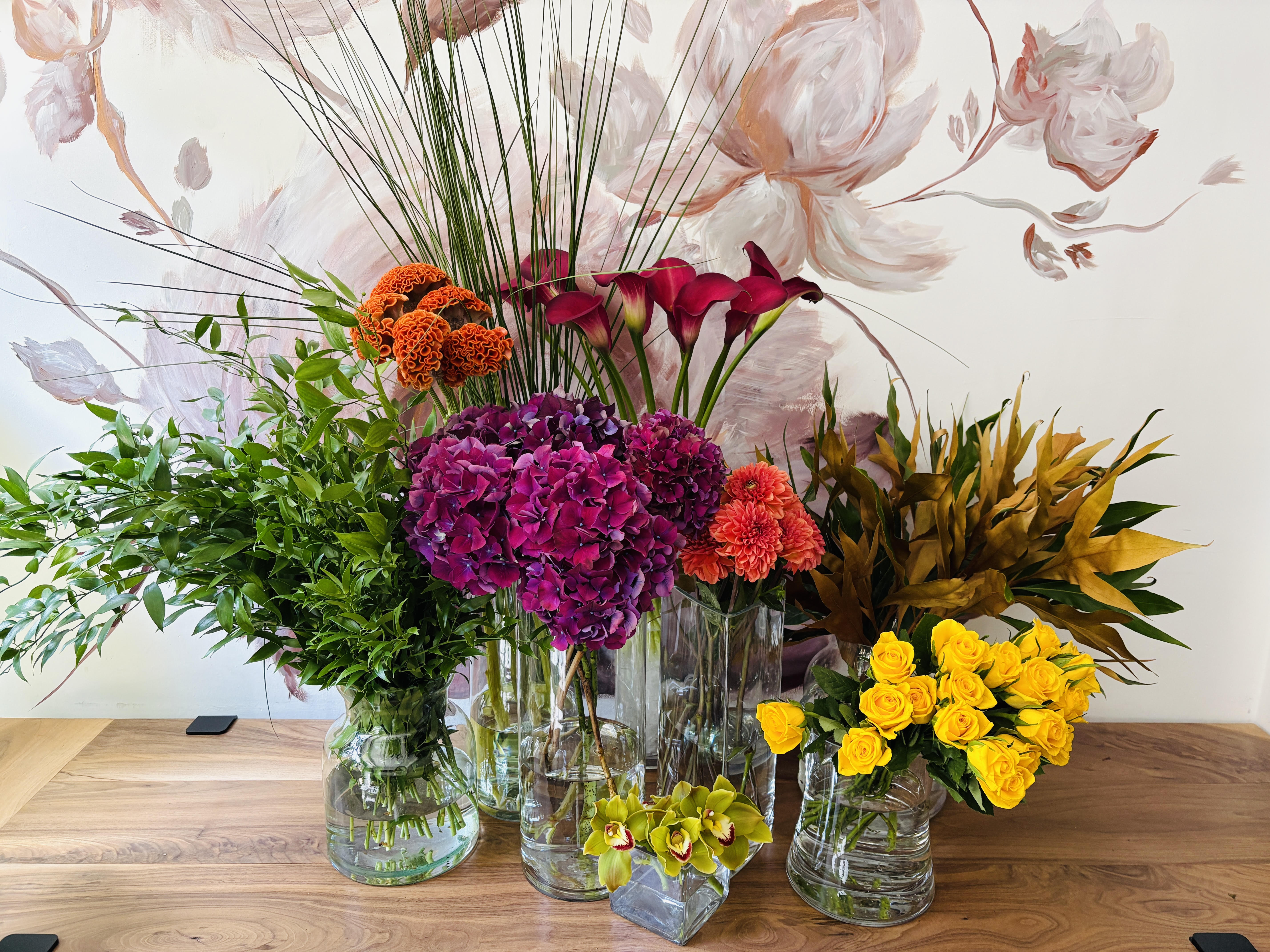
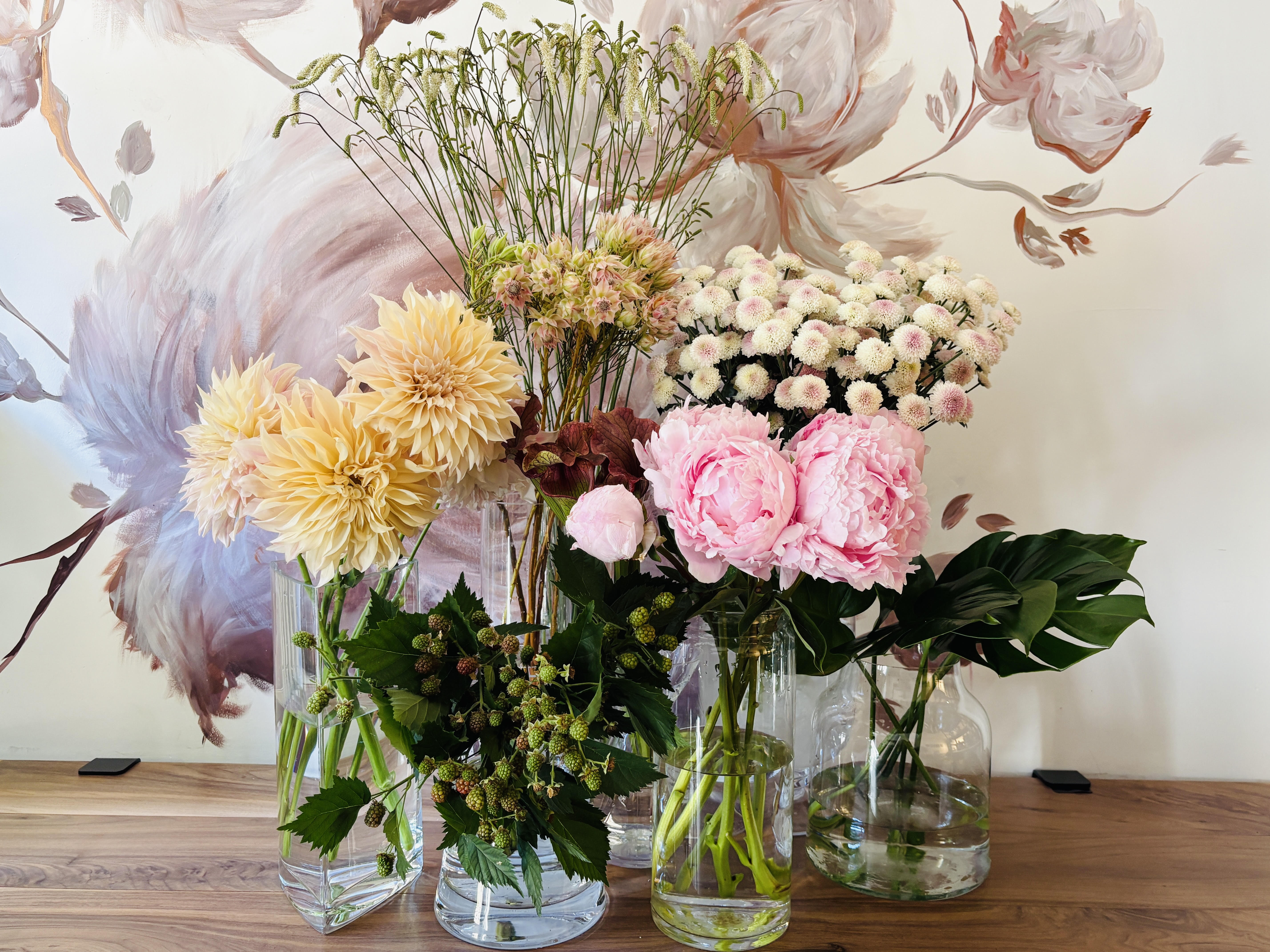
At Penny Blooms & Beans, our Penny Exquisite subscription draws quietly on this lineage. Designed as more than a bouquet, each curation in the series is a seasonal chapter—rooted in discipline, but executed with softness. The floral illustrations that accompany Penny Exquisite—whether embossed on a notecard, screen-printed for our catalogue, or framed as keepsake—follow Accornero’s compositional intelligence: asymmetry with intention, negative space as a kind of breath, each bloom placed not for convenience but for continuity of mood.
Like Accornero, we believe in flowers not simply as adornment, but as memory. His scarves were not ephemeral fashion pieces, but miniature herbaria—quiet, precise, and timeless. Similarly, our approach to floristry insists on storytelling: on letting petals carry narrative weight, on letting arrangements be read, not just seen.
In a culture that moves ever faster, Accornero’s work remains an act of stillness. A reminder that to draw a flower is not to decorate—it is to observe, to know, and to honour. For Accornero, and for us, a flower is not a flourish. It is an idea, pressed gently onto paper.