
05 May Augusta: An Authored Landscape
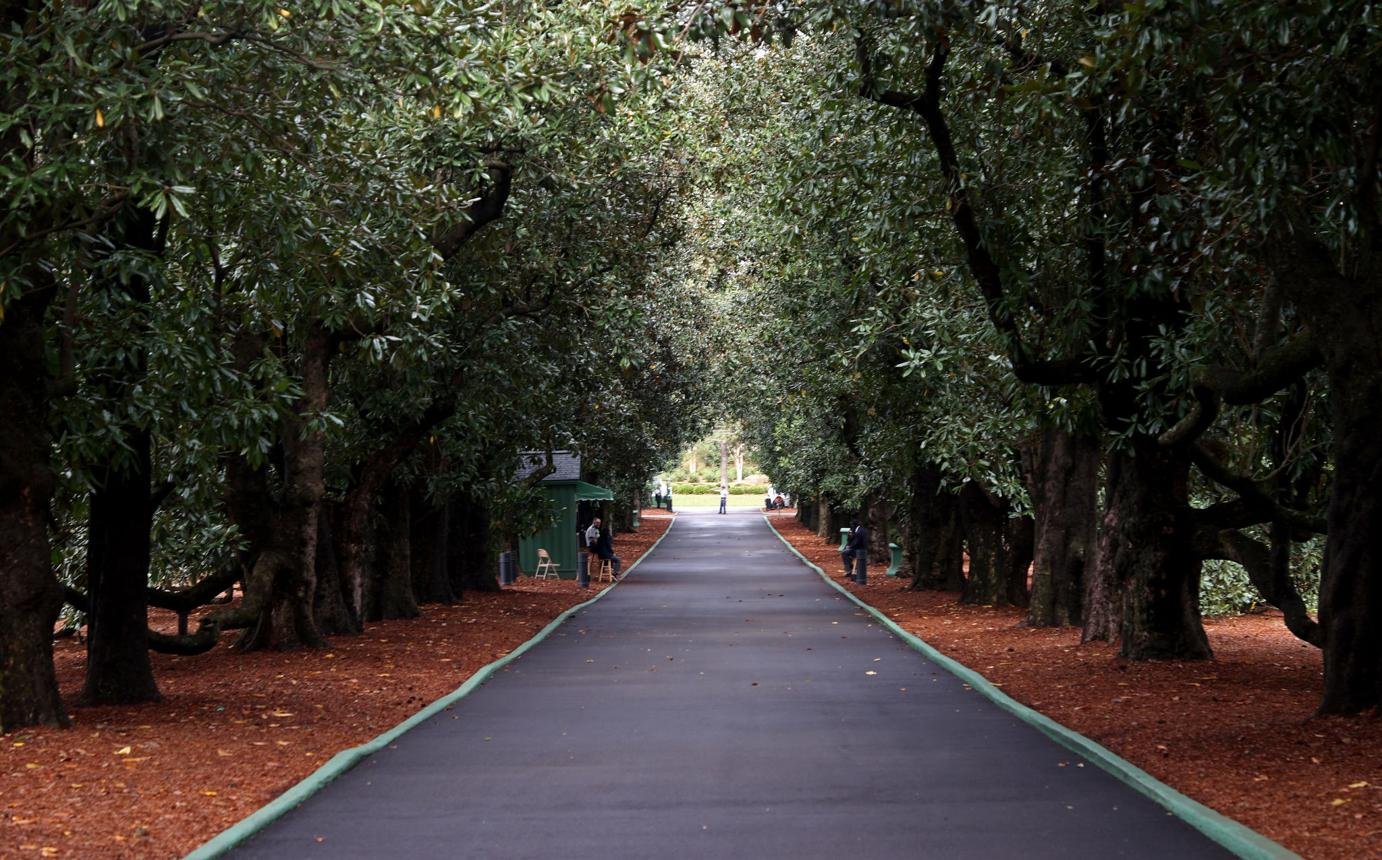
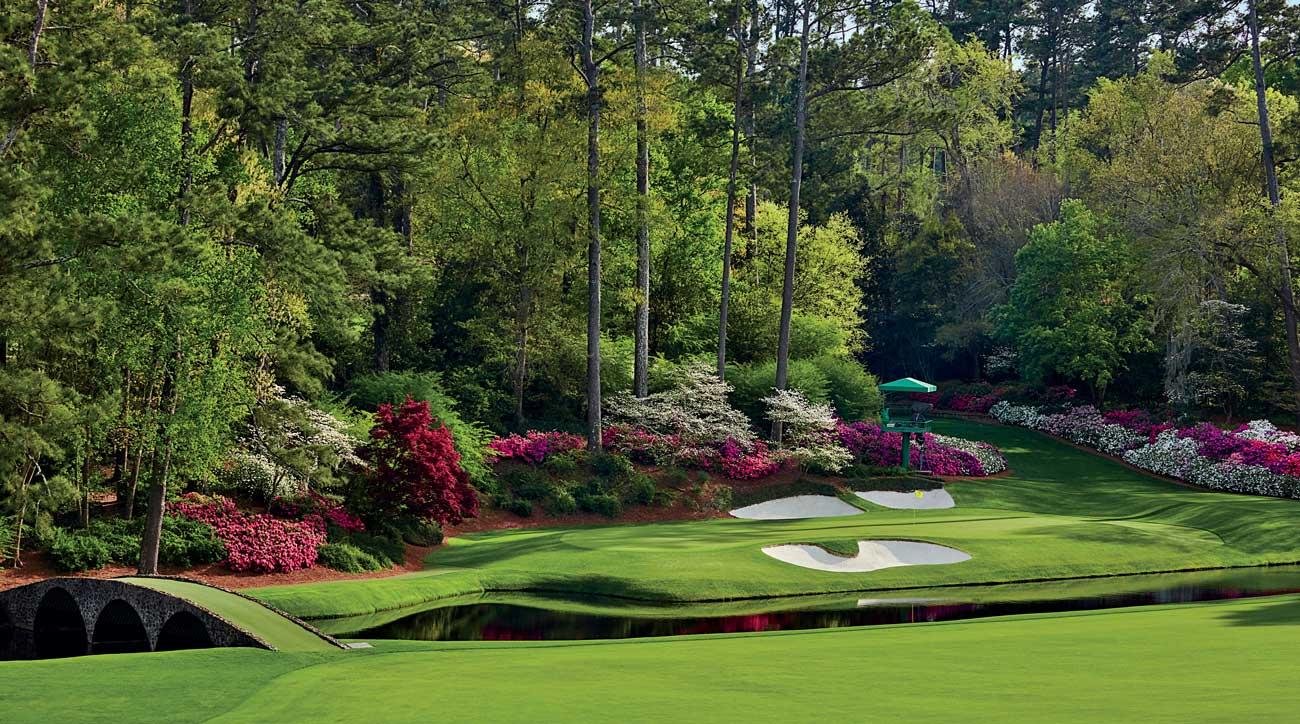

There are gardens, and then there is Augusta National Golf Club—a place so controlled that it begins to feel less like landscape and more like intention. Each April, as the Masters Tournament unfolds, viewers are presented with a version of nature that appears effortless: azaleas arranged in carefully managed colour, fairways of near-uniform tone, shadows falling with quiet consistency.
Augusta is not quite nature. It is, in effect, an authored landscape.
Founded in 1933 by Bobby Jones and shaped alongside Alister MacKenzie, the course was conceived not merely as a venue, but as a proposition: that a golf course could be both strategic and restrained. MacKenzie’s belief—that a course should reveal itself gradually—remains embedded in every contour.
Ownership, too, reflects that restraint. Augusta is not owned in the conventional sense, but governed as a private club, overseen by a chairman rather than a proprietor. Leadership has passed quietly between a small number of stewards, each acting less as an innovator and more as a custodian. What is notable is not change, but continuity. The course has been lengthened and adjusted over time, yet always within the logic of its original design. It is not preserved, but edited—so carefully that the distinction is difficult to detect.
The Most Private Invitation in Sport
Membership at Augusta is not applied for. It is extended. There is no formal process, no visible criteria, and no published list. Its membership—never disclosed, rarely discussed—remains one of the last functioning examples of private institutional culture.
Influence gathers here, but without introduction; reputation is assumed rather than displayed.
The financial threshold, by most accounts, is secondary. The more meaningful barrier is social: discretion, alignment, and a long view of reputation. Augusta does not reward visibility. It selects for those who do not depend on it.
Grass, Engineered Like Couture


 If Augusta operates as theatre, its grass is the material through which that theatre is realised.
Fairways are planted with perennial ryegrass, chosen for durability and tonal consistency. Beneath them lies a sub-air system that regulates moisture and temperature with precision, allowing the surface to remain stable regardless of conditions. The greens—constructed from bentgrass—are maintained to exacting tolerances, their speed the result of calibration rather than chance.
Even the striping, often mistaken for surface treatment, is simply the effect of mowing direction. Light, not paint, creates the pattern.
The Poetry of Pars
Long before it became a stage for modern golf, the land formed part of Fruitland Nurseries, once among the more ambitious horticultural enterprises in the American South. By the late 19th century, it specialised in imported ornamental species, many uncommon in the region.
When the property was acquired in the early 1930s, elements of this botanical inheritance remained. Rather than remove it, the founders incorporated it into the routing of the course. Fairways were threaded through existing plantings; holes were named after the species that defined them— Magnolia, Camellia, Azalea—retaining a quiet link to the land’s earlier purpose.
Yet, over time, this relationship has been refined. Some original plantings have disappeared, others replaced or enhanced, their presence adjusted to suit the evolving composition of the course. The names, however, remain.
At Augusta, the numbers organise the game, but the names recall the land.
They are not strict records of what is there, but carefully maintained suggestions of what once was —a form of horticultural memory, edited with the same restraint that shapes the course itself.
The result is less a designed landscape than a cultivated continuation.
Amen Corner: Where Time Slows
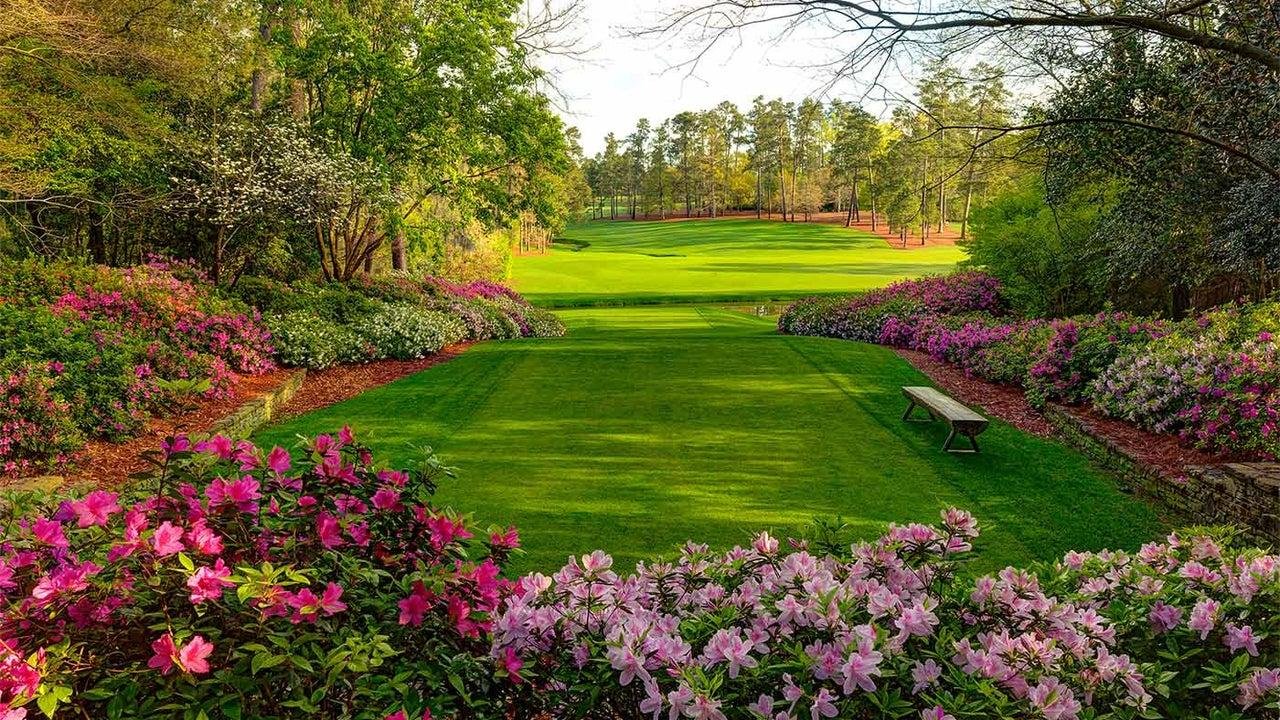
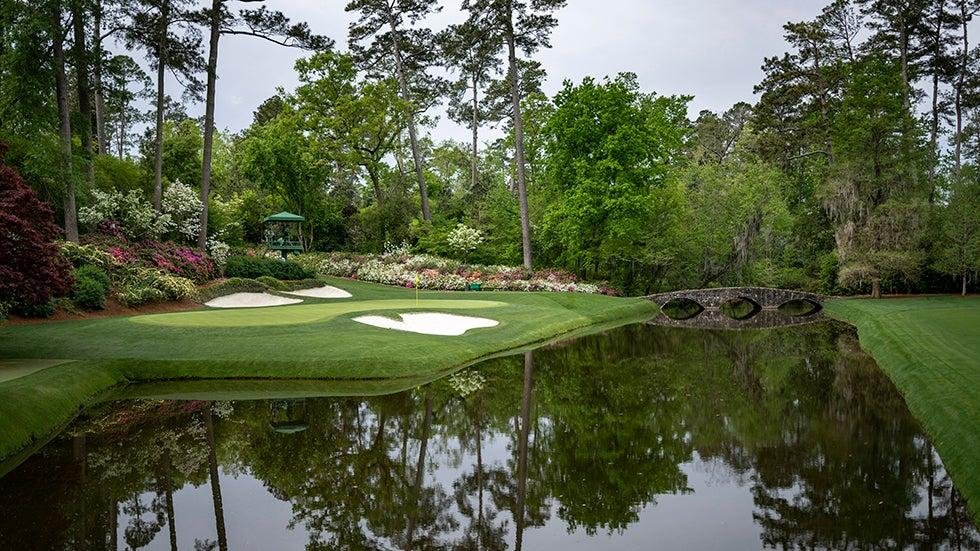
The stretch known as Amen Corner—holes 11, 12 and 13—remains the course’s most studied sequence. Rae’s Creek runs quietly through it, while shifting winds introduce an element of uncertainty that cannot be engineered away.
Its difficulty lies not in spectacle, but in proportion. Margins are narrow, decisions carry weight, and recovery is limited. It is here that Augusta’s design philosophy is most apparent: risk is offered, never imposed.
The Unseen Discipline
Augusta’s defining characteristic may be what it chooses not to display.
There is no overt sponsorship, no visible advertising, and little to interrupt the continuity of the setting. Broadcasts follow the same logic—controlled, measured, and largely uninterrupted.
Behind this sits continuous adjustment. Trees have been repositioned, surfaces refined, distances recalibrated. Yet these changes are incremental, almost imperceptible. The course evolves, but without announcing that it has done so.
A Final Thought
In a landscape increasingly shaped by excess, Augusta presents a different model.
It suggests that discipline, consistently applied, can produce something more enduring than scale. That restraint, when sustained over time, becomes a form of identity. And that even a surface as ordinary as grass can, through precision and care, acquire significance.
For Penny Blooms & Beans, the parallel is clear. Nature is only the starting point. What follows— the shaping, the editing, the decisions of emphasis and omission—is where character is formed.
And that, perhaps, is why Augusta lingers. Not entirely as a place, but as a standard.